Factories, plants & construction sites

PPE kit detection on the cameras your site already has

PPE kit detection looks in the views your existing CCTV already has for the safety kit an area requires — a helmet, a high-visibility vest, gloves. PGAK has demonstrated one item so far, bare hands on an overhead assembly-line camera; every other item, and how a missing item reaches a supervisor, is tested on your own cameras before it is quoted. It supports a safety supervisor rather than replacing one.

A site supervisor in a yellow safety helmet and high-visibility vest holding a clipboard
Stock photo: RDNE Stock project / Pexels. Illustrative — not a PGAK site or customer.

Request a camera assessment. Timing and scope agreed on the call. By submitting, you ask PGAK to contact you about this enquiry. Privacy notice.

Treat this page as evaluation guidance. Product availability and site suitability require an approved configuration and technical test. Published scenarios are illustrative, not verified customer results.

Sound familiar?

  • Helmet rules are enforced only when a supervisor happens to be standing there.
  • The safety officer hears about bare hands on the line after the near miss, not before.
  • An audit asks how PPE is checked, and the only record is a signed register.

How PPE kit detection works

On your cameras PGAK tests which items can be seen in the areas you choose, and how a missing item would reach a supervisor — with a snapshot, after how long and to whom. Those details go into the written scope once that test has worked. In PGAK's published recording the model boxes bare hands directly, with a confidence figure on each, and every detection is meant for a person to judge.

Rules by zone

Only the areas you draw — the line, the gate, the scaffold — are checked.

A snapshot with each alert

So a supervisor can judge an alert before walking over.

Your recorder stays as it is

Recording carries on exactly as it does today.
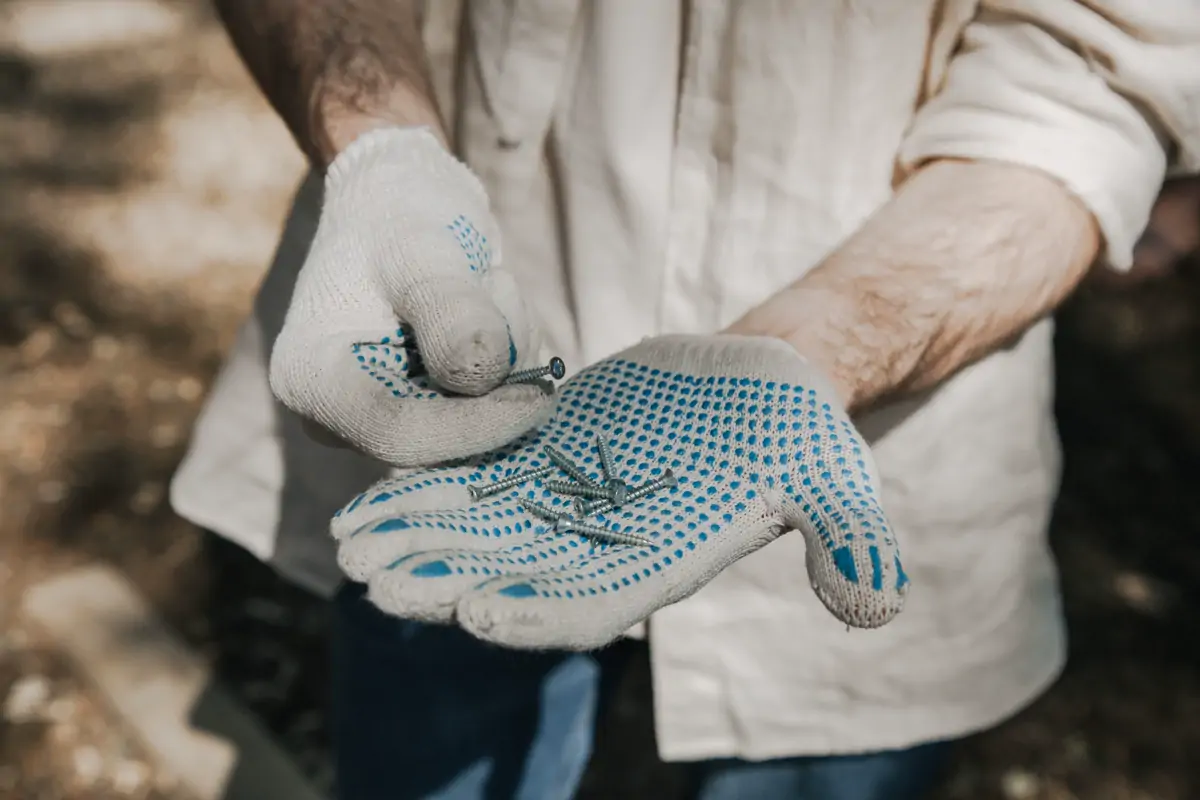
Hands in knitted safety gloves holding a few small screws
Stock photo: Ron Lach / Pexels. Illustrative — not a PGAK site or customer.

Which PPE items can be checked

On a factory floor or for construction site PPE monitoring, helmets and high-visibility vests are the usual starting point; gloves, shoes and masks need a closer view. Which items each camera can check is agreed at the site assessment. PGAK's published recording shows one item — bare hands on an assembly line — and every other item is tested on your cameras before it is quoted.

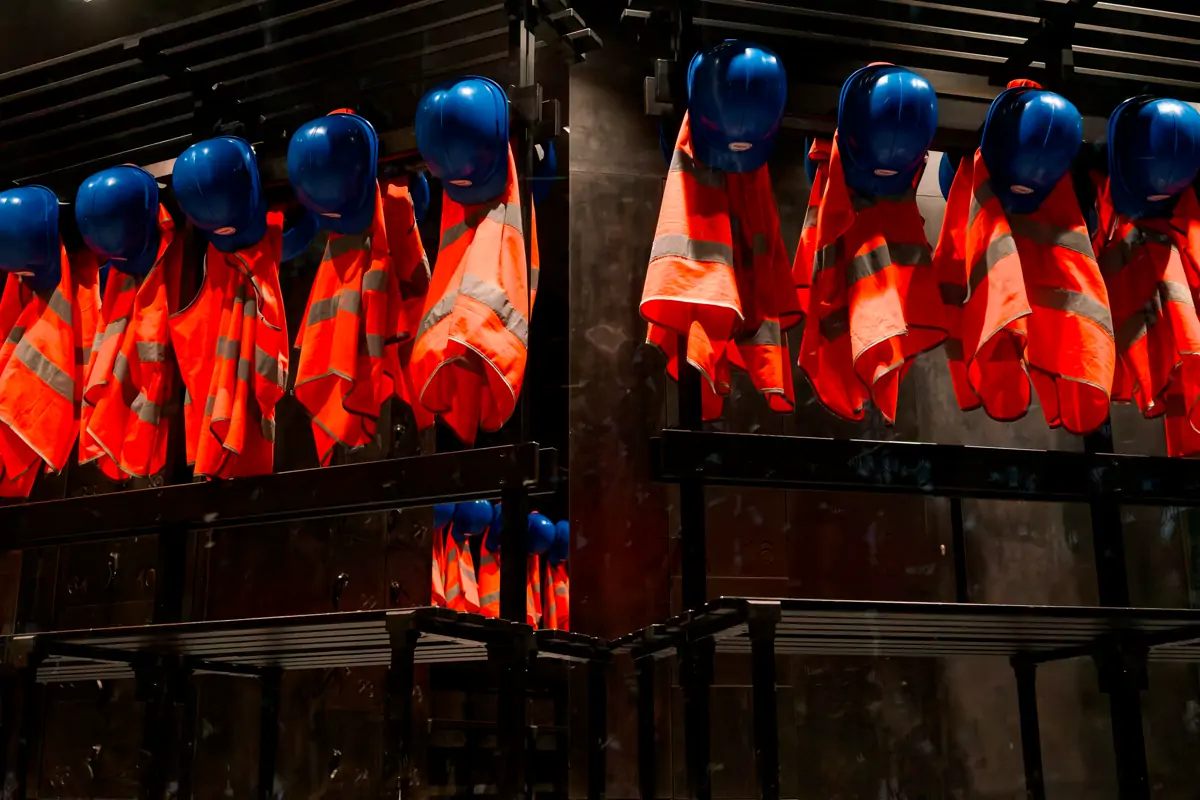
Orange high-visibility vests and blue safety helmets hanging on a rack
Stock photo: Carsten Ruthemann / Pexels. Illustrative — not a PGAK site or customer.

What it is not

It is a PPE compliance monitoring aid, not a replacement for a safety officer, a permit system or training — and a camera only sees what is in front of it. PGAK publishes no accuracy figures for PPE; it is judged by a test on your own cameras. It checks for kit, not identity, so no face recognition is needed.

What to check before deployment

Camera and recorder streams
Confirm RTSP access or ONVIF discovery, stream stability and the views that matter. Do not send camera passwords in the enquiry form.
On-site processing
Ask which processing device is needed, how it is sized, what runs locally and what information leaves the site.
Alert acceptance
Test agreed zones in daytime and at night. Record useful alerts, nuisance alerts, missed events and end-to-end alert delay.
Complete commercial quote
Confirm enabled cameras, sites, subscription, setup, hardware, taxes and support. Use the assessed scope to compare proposals.

Get a site-specific AI video analytics price.

PPE kit detection — common questions

What is PPE kit detection?

Video analytics that checks whether people in a camera view are wearing the protective equipment an area requires — such as a helmet, vest or gloves — and alerts a supervisor with a snapshot when an item is missing.

Can it work with our existing CCTV cameras?

It can, if the camera gives a clear enough view of the item; PGAK's published recording used a camera already fitted above a line. PGAK reviews your camera views at the assessment and tells you which items each one can check before anything is quoted.

How accurate is PPE detection?

PGAK does not publish an accuracy figure, because it changes with every camera, angle and light. The acceptance test on your site records useful alerts, false alerts and misses so you can judge it yourself.

Does PPE detection need face recognition?

No. It checks for equipment, not identity.

Start with a free audit of your own cameras.

Your number and camera count is all it takes. We call within one working hour and send the report within 48 hours.

Recorded by PGAK on an existing line camera

Bare hands flagged on an assembly line

A clip from a camera already fitted above a vehicle chassis line, playing at about twice real speed. No camera was added for this.

Bare hands flagged, with the model's confidence on each box14s · no soundBare hands are flagged on an assembly line. The box is drawn on the hand rather than the person, and the figure beside each label is the model's confidence, which changes from frame to frame. Low figures are left in deliberately: they are the sort of detection a supervisor should be checking, not one a system should act on by itself.Conditions: Recorded on an existing overhead line camera; the clip's burned-in overlay reads 01-04-2023, 16:57. No camera was added for this.

Gloves are one PPE class. Which classes apply to a site is confirmed at the assessment before anything is quoted.

Who you are dealing with

A registered Ludhiana company that builds the software it sells.

PGAK Innovations Pvt. Ltd. is incorporated in Punjab, engineers its own AI layer, and runs the free camera audit itself — the people who answer the phone are the people who built the product. About the company →

Founded
2023, Ludhiana
Registered office
BK Towers, 2480/2, Gill Rd, Ludhiana 141003
CIN
U62013PB2023PTC058631
Talk to us
+91 62839 93600WhatsAppOpen Mon–Sat 09:00-19:00

What a project here involves

Compatible cameras and recorders you already own are reused wherever they are suitable. Detection runs on an on-site processing unit, and camera suitability, stream access, processing hardware and network are all confirmed at the assessment — with anything extra itemised in the quote before you commit.

What the quote is made of

ComponentWhat decides itPrice
Cameras reusedWhich existing cameras give a usable view for each use case — confirmed on a still image of each view.Quoted per site
Cameras moved or addedOnly where a use case needs a view no camera has (plates and faces usually do). Each one named in the quote.Quoted per site
On-site processing unitDetection runs here, next to the recorder. Model, quantity and warranty depend on camera count and analytics.Quoted per site
Software / licencesWhich analytics on which cameras, the term, and the basis for renewal.Quoted per site
Installation and configurationStream setup, zones, schedules, alert routing and commissioning.Quoted per site
PilotAgreed scenes, acceptance criteria and duration before rollout.Quoted per site
SupportHours, response versus fix time, and who replaces failed hardware.Quoted per site
TaxesStated separately on the quote.Quoted per site

How it is evaluated

  1. 1. Self-check — Two minutes, nothing sent — find likely blockers.
  2. 2. Scope on paper — Cameras, use cases and acceptance tests, written down.
  3. 3. Site assessment — PGAK checks streams, views and network on your cameras.
  4. 4. Pilot against criteria — Precision, recall, false alerts and delay, agreed in advance.
  5. 5. Written proposal — Itemised as above; you decide whether to roll out.

Evidence for this page

  • PPE check on an existing line camera. Recorded on an existing overhead line camera; the clip's burned-in overlay reads 01-04-2023, 16:57. No camera was added for this. Not proved: Gloves are one PPE class. Which classes apply to a site is confirmed at the assessment before anything is quoted. See it →

Discuss your camera setup

Share your phone number, city and camera count. We will clarify the intended use case and agree assessment scope and timing with you. Do not submit camera credentials or footage.

Request a camera assessment. Timing and scope agreed on the call. By submitting, you ask PGAK to contact you about this enquiry. Privacy notice.