Mexico

AI CCTV software for plants and sites in Mexico

Mexico buys cameras at a scale few markets match. Search demand for security cameras here runs into the hundreds of thousands of queries a month, and the result is an enormous installed base sitting in plants, yards and shops across the country, recording continuously and watched by nobody. The constraint is not hardware and has not been for years. It is that making those cameras useful has, until now, meant hiring people who are genuinely scarce here.

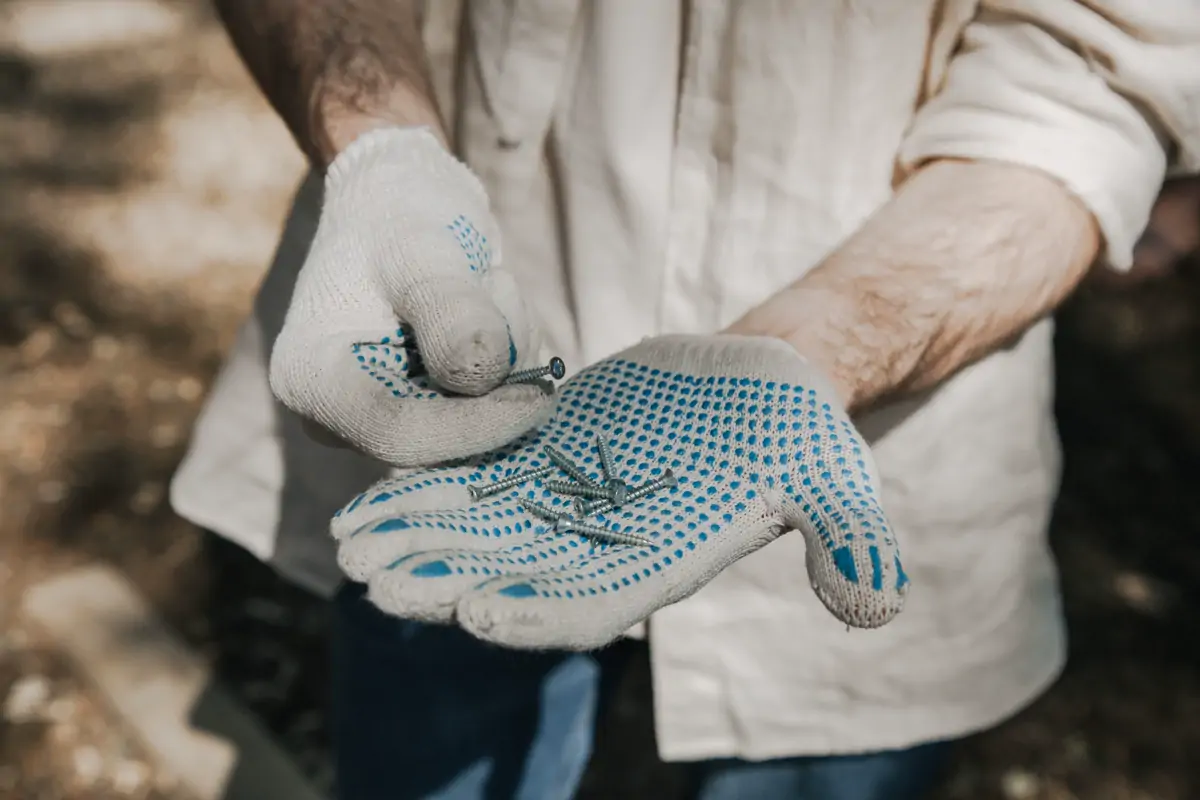
Gloved hands holding metal fasteners on a production line
Stock photo: Ron Lach / Pexels. Illustrative — not a PGAK site or customer.

Request a camera assessment. Timing and scope agreed on the call. By submitting, you ask PGAK to contact you about this enquiry. Privacy notice.

Treat this page as evaluation guidance. Product availability and site suitability require an approved configuration and technical test. Published scenarios are illustrative, not verified customer results.

Sound familiar?

  • An installed camera estate nobody has the staff to watch.
  • Shift and contracted labour whose hours reach payroll as a number nobody verified.
  • Material shrinkage found at stocktake rather than when it happened.
  • Analytics projects that stalled because the specialists to run them were not available.

The skills gap is the actual barrier

Industry analyses of the Mexican surveillance market keep landing on the same obstacle: a shortage of AI, computer-vision and cybersecurity specialists makes implementation hard. That is worth naming because it is precisely the thing this product is shaped around. Nobody at your end has to build, train or maintain a model. The detections are configured against your feeds and tuned for your site, and the expertise required to keep them running stays with us rather than being a role you have to fill in a tight labour market.

Manufacturing shifts and the gate

The border manufacturing belt and the Bajío run on shift patterns and a substantial contracted workforce. Attendance in that environment fails in a specific way: the record exists, but it is produced by a device somebody can present a colleague's credential to, and the hours reach payroll unverifiable. Reading faces at the personnel gate produces the record as a by-product of arriving, and contracted crews can be counted in their own group separately from direct staff.

A supervisor in a hard hat and high-visibility vest holding a clipboard
Stock photo: RDNE Stock project / Pexels. Illustrative — not a PGAK site or customer.

Yards, docks and the hours when nothing should move

A plant's losses usually happen at the boundary and the dock rather than inside, and usually at hours when the site is supposed to be still. A line drawn across a yard with a schedule attached distinguishes the forklift at two in the afternoon from the same movement at two in the morning. Vehicles at the gate can be logged by plate so that a dispatch question later is a search rather than an argument.

Serving Mexican operations from day one

A Mexican plant does not have to wait for anyone to open an office locally. PGAK takes the site on remotely: the audit reads your existing feeds, the detections are configured for your gates, yards and docks, and the tuning runs against your own footage over the following fortnight. The product interface is in English, which suits plant managers and multinational operators working in English; for a team working wholly in Spanish that is worth raising early, and it is answered plainly in the questions below.

The dock, the dispatch dispute and the plate

In an IMMEX or maquiladora operation the expensive disagreements are rarely about intruders. They are about what left the dock, on whose truck, and when — and they surface days later when paperwork and stock stop agreeing.

Which truck, at what time

Plate logging at the vehicle gate turns a dispatch question into a search. Instead of someone scrubbing an afternoon of footage, the record says which plate entered, when it left, and attaches the clip.

Cross-border shift patterns

Border plants run shifts timed around crossing times, which means gates are busiest in concentrated bursts. Attendance that depends on people queuing at a device fails precisely in those bursts; reading faces as people walk the gate does not.

Contracted crews counted separately

Where a portion of the floor arrives through an agency, the hours reaching payroll are the agency's figure. Enrolling those crews as their own group produces an independent count without changing how anyone clocks in.

Night and weekend movement

A yard line with a schedule separates the forklift at two in the afternoon from the same movement at two on a Sunday morning. That single distinction is usually what turns a camera estate from a recording device into something anyone bothers to act on.

What it does not do

It does not sell or replace cameras, and it does not rescue a camera that was mounted facing the wrong way. It does not stop theft; it shortens how long it takes to know. It needs power and a connection at the site to send anything. And what your particular cameras can carry is settled by looking at your feeds, not by a specification sheet.

What to check before deployment

Camera and recorder streams
Confirm RTSP access or ONVIF discovery, stream stability and the views that matter. Do not send camera passwords in the enquiry form.
On-site processing
Ask which processing device is needed, how it is sized, what runs locally and what information leaves the site.
Alert acceptance
Test agreed zones in daytime and at night. Record useful alerts, nuisance alerts, missed events and end-to-end alert delay.
Complete commercial quote
Confirm enabled cameras, sites, subscription, setup, hardware, taxes and support. Use the assessed scope to compare proposals.

Get a site-specific AI video analytics price.

AI CCTV software Mexico — common questions

Do we need an AI or data team to run this?

No, and that is deliberate. The shortage of computer-vision specialists is one of the documented obstacles to analytics adoption in Mexico, so nothing here asks you to hire for it. Configuration and tuning are done against your feeds by us.

Will it work with the cameras the plant already has?

That is the normal case. The software runs on an existing camera and recorder estate. Which detections your specific feeds can support is what the free audit establishes before anything is quoted.

Is the product available in Spanish?

Not at present — the interface and this page are in English. For a site whose team works entirely in Spanish, that is a genuine limitation and worth raising early rather than discovering later.

Can it separate contracted crews from our own employees?

Yes. Contracted workers are enrolled in their own group, so their hours are recorded independently and can be checked against what the agency invoices.

Start with a free audit of your own cameras.

Share your phone number, city and camera count. We will discuss your priority use case and agree the assessment scope, timing and next step with you.

From a working PGAK install in India

Counting what crosses the line at the dock

Sixteen seconds from a PGAK camera at a loading bay during an evening unload. It is a site in India, not Mexico — but the dock is the dock, and this is the mechanism a dispatch dispute turns on.

The count climbing during an unload16s · no soundEach sack carried across the line is detected, given a tracking number so the same one is not counted twice, and added to the running total — the count goes from four to seven while you watch. The figure is there at the end of the unload instead of being reconstructed from memory, so it can be checked against the paperwork while the lorry is still at the bay.Conditions: Recorded 19 December 2022, 19:43, on an existing dock camera with one counting line. Confidence for each detection is shown on its box — the ones here sit around 0.84 to 0.90. Counting depends on the line being crossed cleanly: two people through the gap shoulder to shoulder, or a load carried back out and in again, are the cases to test on your own bay before relying on the figure.The transport company's name and telephone numbers, painted along the side of the lorry, are blurred for the whole clip. They belong to a third party and are not ours to publish. The clip carries no audio track.

The model is trained on a sack, and it counts sacks crossing a line. It is not an inventory system and it does not reconcile against a stock ledger. On a maquiladora dock the item type and the bay geometry are different again, and both are tested on your own footage before anything is quoted.

Who you are dealing with

A registered Ludhiana company that builds the software it sells.

PGAK Innovations Pvt. Ltd. is incorporated in Punjab, engineers its own AI layer, and runs the free camera audit itself — the people who answer the phone are the people who built the product. About the company →

Founded
2023, Ludhiana
Registered office
BK Towers, 2480/2, Gill Rd, Ludhiana 141003
CIN
U62013PB2023PTC058631
Talk to us
+91 62839 93600WhatsAppOpen Mon–Sat 09:00-19:00

What a project here involves

Compatible cameras and recorders you already own are reused wherever they are suitable. Detection runs on an on-site processing unit, and camera suitability, stream access, processing hardware and network are all confirmed at the assessment — with anything extra itemised in the quote before you commit.

What the quote is made of

ComponentWhat decides itPrice
Cameras reusedWhich existing cameras give a usable view for each use case — confirmed on a still image of each view.Quoted per site
Cameras moved or addedOnly where a use case needs a view no camera has (plates and faces usually do). Each one named in the quote.Quoted per site
On-site processing unitDetection runs here, next to the recorder. Model, quantity and warranty depend on camera count and analytics.Quoted per site
Software / licencesWhich analytics on which cameras, the term, and the basis for renewal.Quoted per site
Installation and configurationStream setup, zones, schedules, alert routing and commissioning.Quoted per site
PilotAgreed scenes, acceptance criteria and duration before rollout.Quoted per site
SupportHours, response versus fix time, and who replaces failed hardware.Quoted per site
TaxesStated separately on the quote.Quoted per site

How it is evaluated

  1. 1. Self-check — Two minutes, nothing sent — find likely blockers.
  2. 2. Scope on paper — Cameras, use cases and acceptance tests, written down.
  3. 3. Site assessment — PGAK checks streams, views and network on your cameras.
  4. 4. Pilot against criteria — Precision, recall, false alerts and delay, agreed in advance.
  5. 5. Written proposal — Itemised as above; you decide whether to roll out.

Evidence for this page

No PGAK recording is published for this page yet. The capability register shows what has been demonstrated and under what conditions.

Discuss your camera setup

Share your phone number, city and camera count. We will clarify the intended use case and agree assessment scope and timing with you. Do not submit camera credentials or footage.

Request a camera assessment. Timing and scope agreed on the call. By submitting, you ask PGAK to contact you about this enquiry. Privacy notice.