Saudi Arabia

AI CCTV software for sites across Saudi Arabia

Saudi sites tend to be large, far apart, and staffed by a workforce that rotates. Those three facts shape the security problem more than anything about cameras: the distance makes every site visit expensive, the scale makes manual watching impossible, and the rotation makes any record that depends on recognising faces by memory worthless. PGAK adds detection and a workforce record to cameras a site already runs, without a visit.

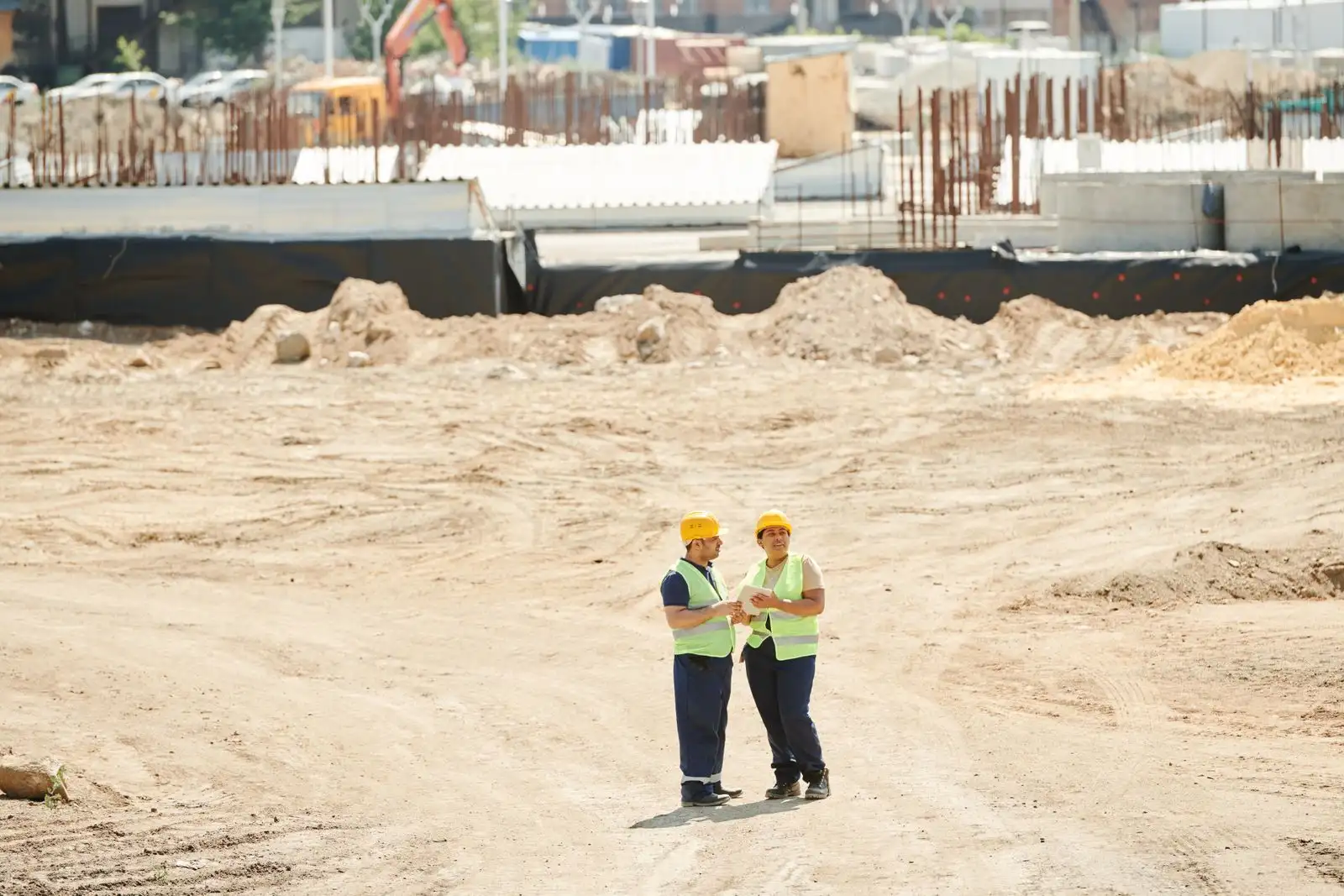
Two workers in hard hats and high-visibility vests on a sandy construction site, with rebar foundations behind them
Stock photo: Mikael Blomkvist / Pexels. Illustrative — not a PGAK site or customer.

Request a camera assessment. Timing and scope agreed on the call. By submitting, you ask PGAK to contact you about this enquiry. Privacy notice.

Treat this page as evaluation guidance. Product availability and site suitability require an approved configuration and technical test. Published scenarios are illustrative, not verified customer results.

Sound familiar?

  • Sites hours apart, and any change means someone drives there.
  • A contracted workforce that turns over faster than anyone can learn it.
  • Material and plant walking off a site that is still under construction.
  • Recorders that hold the evidence and tell nobody at the time.

Distance is the cost nobody prices in

A site in Jubail, a second in Riyadh and a third on a highway between them is a normal shape here, and the ordinary way of tuning a detection system — an engineer on site adjusting thresholds until the alerts settle — does not survive that geography. Doing the audit and the tuning against the feeds instead of in person is not a compromise in this market; it is the only version that scales past the second site.
Construction sites and the workforce question

A site that is still being built has two problems at once: plant and material leaving it, and a labour force whose hours reach the client as a figure on a subcontractor's invoice. The same cameras answer both. A line across the material yard raises an alert outside working hours; the personnel gate produces an arrival and departure record per person. Neither needs a device at a desk, which matters on a site where the office is a cabin that moves.

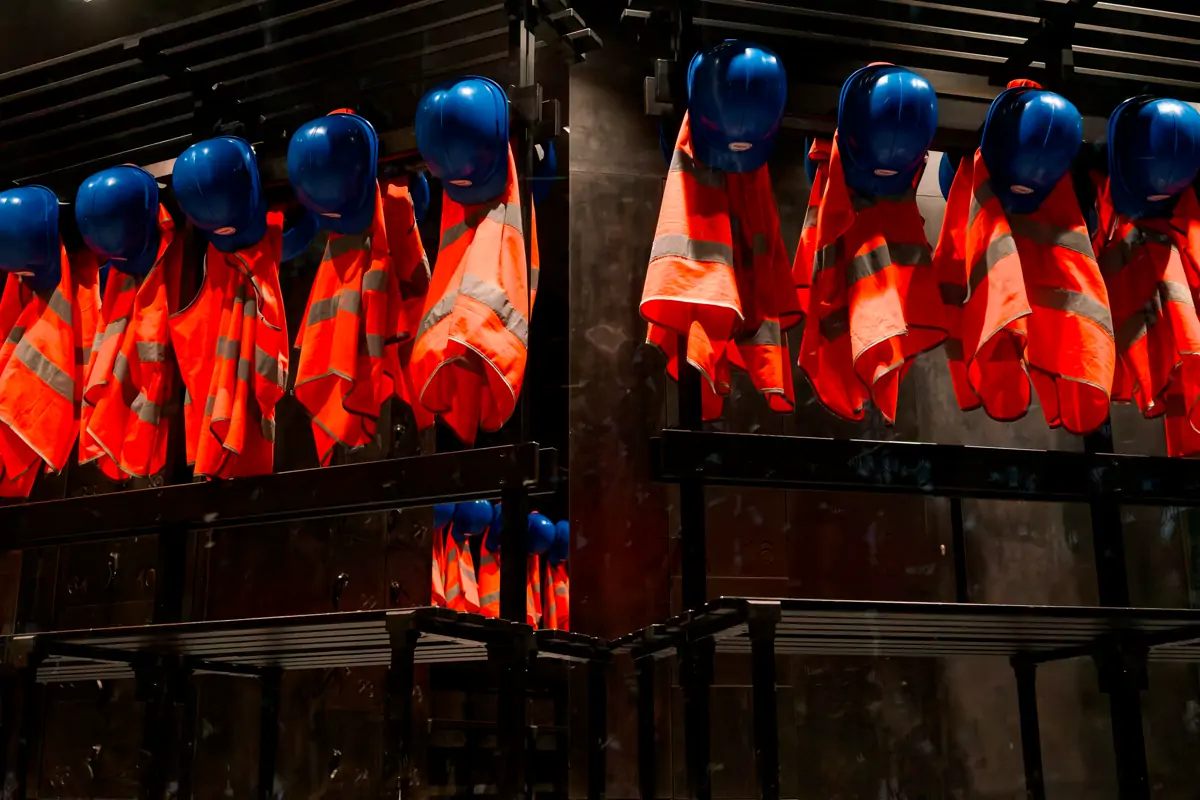
Orange high-visibility vests and blue safety helmets hanging on a rack
Stock photo: Carsten Ruthemann / Pexels. Illustrative — not a PGAK site or customer.

Industrial estates and the gate that never closes

Jubail and Yanbu run processes that do not stop, which makes the personnel gate and the vehicle gate the two points where a day is actually measured. Plate logging at the vehicle gate turns a dispatch question into a search; face recognition at the personnel gate turns a shift into a record. Neither asks anyone to stop at a desk, which is what makes it survive a site running around the clock.

How PGAK delivers in Saudi Arabia

PGAK serves Saudi sites remotely from India, and across this geography that is the advantage rather than the compromise: a site in Jubail and a site outside Riyadh are configured and tuned in the same week, with no travel between them and no waiting for an engineer to be routed. The software goes onto the cameras and recorder already installed; the audit that decides what those cameras can carry runs on your feeds before anything is committed. Camera work on the ground stays with whoever installed the system.

Who owns the cameras on a project site

On a giga-project or a large contract, the camera estate often belongs to someone other than the organisation that needs the record — and that question decides more about a deployment here than any technical detail.

Client-owned estate, contractor workforce

The cameras belong to the principal, the people arriving each morning work for a chain of subcontractors. The record that matters is hours by group, and it has to be produced without handing the subcontractor control of the system that measures them.

Contractor-owned, temporary estate

Cameras put up for the duration of the build and removed afterwards. Here the value is almost entirely in the material yard and the plant compound, and the configuration should assume the estate moves as the site progresses.

Shared sites with several contractors at once

Where multiple firms work the same site, a single gate record that separates them by group is usually more valuable than any detection, because it ends the monthly argument about attendance without anyone keeping a manual roster.

Handover

A site that becomes an operating asset keeps the same cameras and needs different rules: the build-phase yard alerts stop making sense the day the building opens. Reconfiguring for that is a change of thresholds, not a new system.

Limits worth knowing first

Three things to settle before a Kingdom-wide rollout rather than after the first site.

Connectivity decides everything

A remote site on an unreliable link will have gaps in what reaches you. The recorder keeps recording locally, but nothing is sent until the connection is back. On desert and industrial sites this is the first item on the audit, not an afterthought.

Lighting sets the ceiling

Night detection depends on what the camera sensor recorded. No processing afterwards recovers detail that was never captured, and gate lighting is often the cheapest fix available.

Arabic is not covered

The interface is English. For a project team working in Arabic that is a genuine constraint, and better weighed now than after a pilot.

What to check before deployment

Camera and recorder streams
Confirm RTSP access or ONVIF discovery, stream stability and the views that matter. Do not send camera passwords in the enquiry form.
On-site processing
Ask which processing device is needed, how it is sized, what runs locally and what information leaves the site.
Alert acceptance
Test agreed zones in daytime and at night. Record useful alerts, nuisance alerts, missed events and end-to-end alert delay.
Complete commercial quote
Confirm enabled cameras, sites, subscription, setup, hardware, taxes and support. Use the assessed scope to compare proposals.

Get a site-specific AI video analytics price.

AI CCTV software Saudi Arabia — common questions

Our sites are hundreds of kilometres apart. Does that change the deployment?

It changes it in your favour, because none of the configuration or tuning requires a visit. The audit runs on your feeds, and the fortnight of tuning afterwards is done against your own footage rather than by someone standing on site.

Can it record hours for subcontracted labour?

Yes. Workers can be enrolled in their own group so that arrivals and departures are recorded independently of the hours a subcontractor invoices for.

Is there an Arabic version of the product or this page?

Not at present. This page and the product interface are in English, and we would rather say so than imply otherwise. For a project that needs Arabic, that is a genuine limitation to weigh.

What if a remote site loses its connection?

Alerts stop until it returns, while the recorder keeps recording locally if it has power. On remote sites a reliable link matters more than any detection setting, and it is the first thing the audit looks at.

Start with a free audit of your own cameras.

Share your phone number, city and camera count. We will discuss your priority use case and agree the assessment scope, timing and next step with you.

From PGAK's own test setup in India

Hot work flagged beside flammable storage

Eleven seconds of PGAK's own demonstration footage — a test setup in India, not a customer site and not a Saudi one. It is here because it shows the thing a continuous-process plant actually needs: two detections judged together rather than separately.

Two detections in one frame11s · no soundA man in a hard hat runs an angle grinder along a pipe and the sparks carry several metres across the floor. One box marks the hot work. A second marks three drums on a pallet, two of them carrying flammable hazard diamonds. Neither detection is interesting on its own — a plant runs grinders all day, and drums sit on pallets all day. What a safety officer would want to be told is that the two are in the same frame at the same moment, which is the condition a hot work permit exists to control.Conditions: The clip carries its own burned-in overlay: 18 February 2025, 15:24:40, Camera 01, from a fixed elevated view in daylight. The camera model, its distance from the work and the detection confidence figures are not published here yet — they are being confirmed, and this caption will be updated with them rather than estimated.The vessel identifier T-201A is legible in the background and has been left in, as this is PGAK's own test footage and not a customer's plant. No audio track.

Demonstration footage from a test setup proves the detection runs, not that it will run at your rates on your plant. Jubail and Yanbu lighting, camera positions and permit rules are their own problem, settled on your own feeds during the audit.

Who you are dealing with

A registered Ludhiana company that builds the software it sells.

PGAK Innovations Pvt. Ltd. is incorporated in Punjab, engineers its own AI layer, and runs the free camera audit itself — the people who answer the phone are the people who built the product. About the company →

Founded
2023, Ludhiana
Registered office
BK Towers, 2480/2, Gill Rd, Ludhiana 141003
CIN
U62013PB2023PTC058631
Talk to us
+91 62839 93600WhatsAppOpen Mon–Sat 09:00-19:00

What a project here involves

Compatible cameras and recorders you already own are reused wherever they are suitable. Detection runs on an on-site processing unit, and camera suitability, stream access, processing hardware and network are all confirmed at the assessment — with anything extra itemised in the quote before you commit.

What the quote is made of

ComponentWhat decides itPrice
Cameras reusedWhich existing cameras give a usable view for each use case — confirmed on a still image of each view.Quoted per site
Cameras moved or addedOnly where a use case needs a view no camera has (plates and faces usually do). Each one named in the quote.Quoted per site
On-site processing unitDetection runs here, next to the recorder. Model, quantity and warranty depend on camera count and analytics.Quoted per site
Software / licencesWhich analytics on which cameras, the term, and the basis for renewal.Quoted per site
Installation and configurationStream setup, zones, schedules, alert routing and commissioning.Quoted per site
PilotAgreed scenes, acceptance criteria and duration before rollout.Quoted per site
SupportHours, response versus fix time, and who replaces failed hardware.Quoted per site
TaxesStated separately on the quote.Quoted per site

How it is evaluated

  1. 1. Self-check — Two minutes, nothing sent — find likely blockers.
  2. 2. Scope on paper — Cameras, use cases and acceptance tests, written down.
  3. 3. Site assessment — PGAK checks streams, views and network on your cameras.
  4. 4. Pilot against criteria — Precision, recall, false alerts and delay, agreed in advance.
  5. 5. Written proposal — Itemised as above; you decide whether to roll out.

Evidence for this page

No PGAK recording is published for this page yet. The capability register shows what has been demonstrated and under what conditions.

Discuss your camera setup

Share your phone number, city and camera count. We will clarify the intended use case and agree assessment scope and timing with you. Do not submit camera credentials or footage.

Request a camera assessment. Timing and scope agreed on the call. By submitting, you ask PGAK to contact you about this enquiry. Privacy notice.