How it works
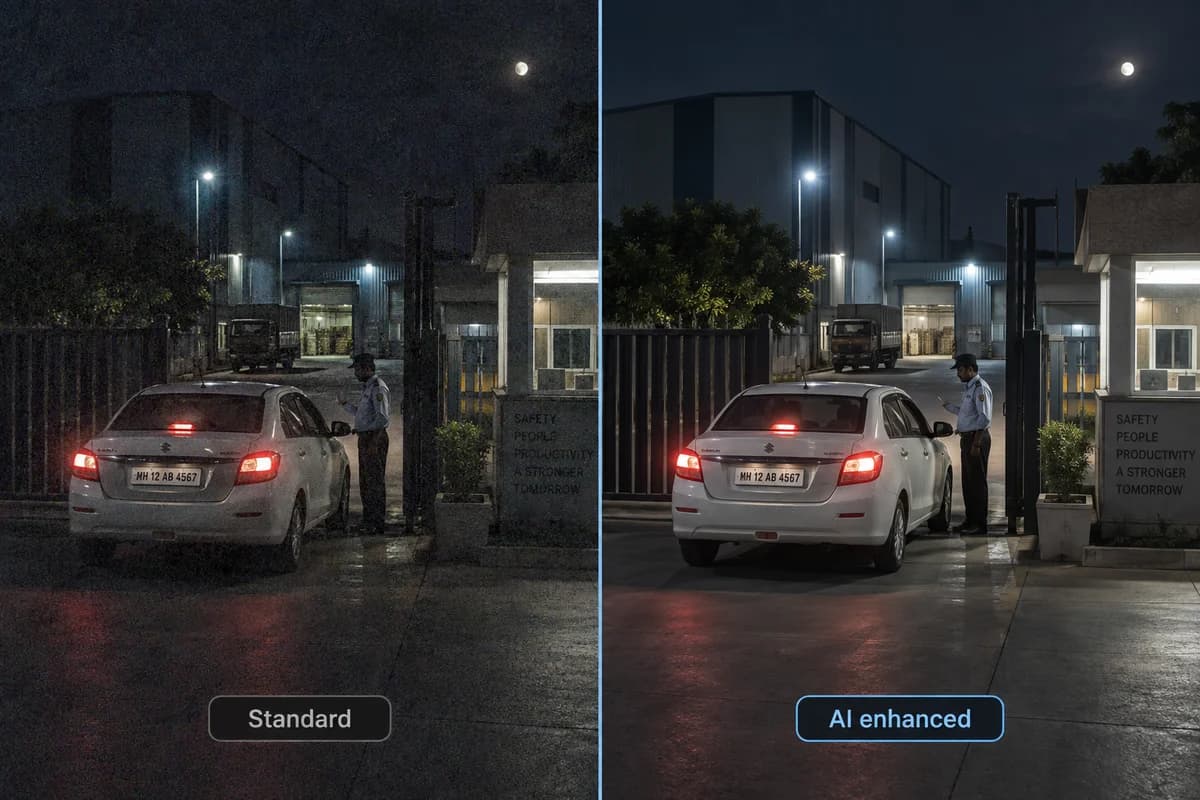
Use AI image processing to reduce noise and improve detail in difficult lighting.
Where it could help your business
Evaluate night visibility at entrances exposed to rain and vehicle headlights.
Test a walking person and moving vehicle under your real lights. Look for motion blur, smeared detail and headlights obscuring plates. Compare the original footage at a useful playback size rather than judging a small preview on a phone.
What your camera setup needs
Depends on the camera sensor, lens and illumination. Processing cannot recover details that were never captured.
Can AI night vision see clearly in complete darkness?
It cannot create reliable scene information without a usable signal. The camera may need infrared or visible illumination, depending on its design and the detail you need.
Check it on your own site
Bring a camera model list and explain the event you want to find or detect. We can use that to scope a compatibility assessment. Ask for a written proposal naming the supported functions, processing hardware, licences and pilot checks before agreeing to an installation.
Check my camera setup →