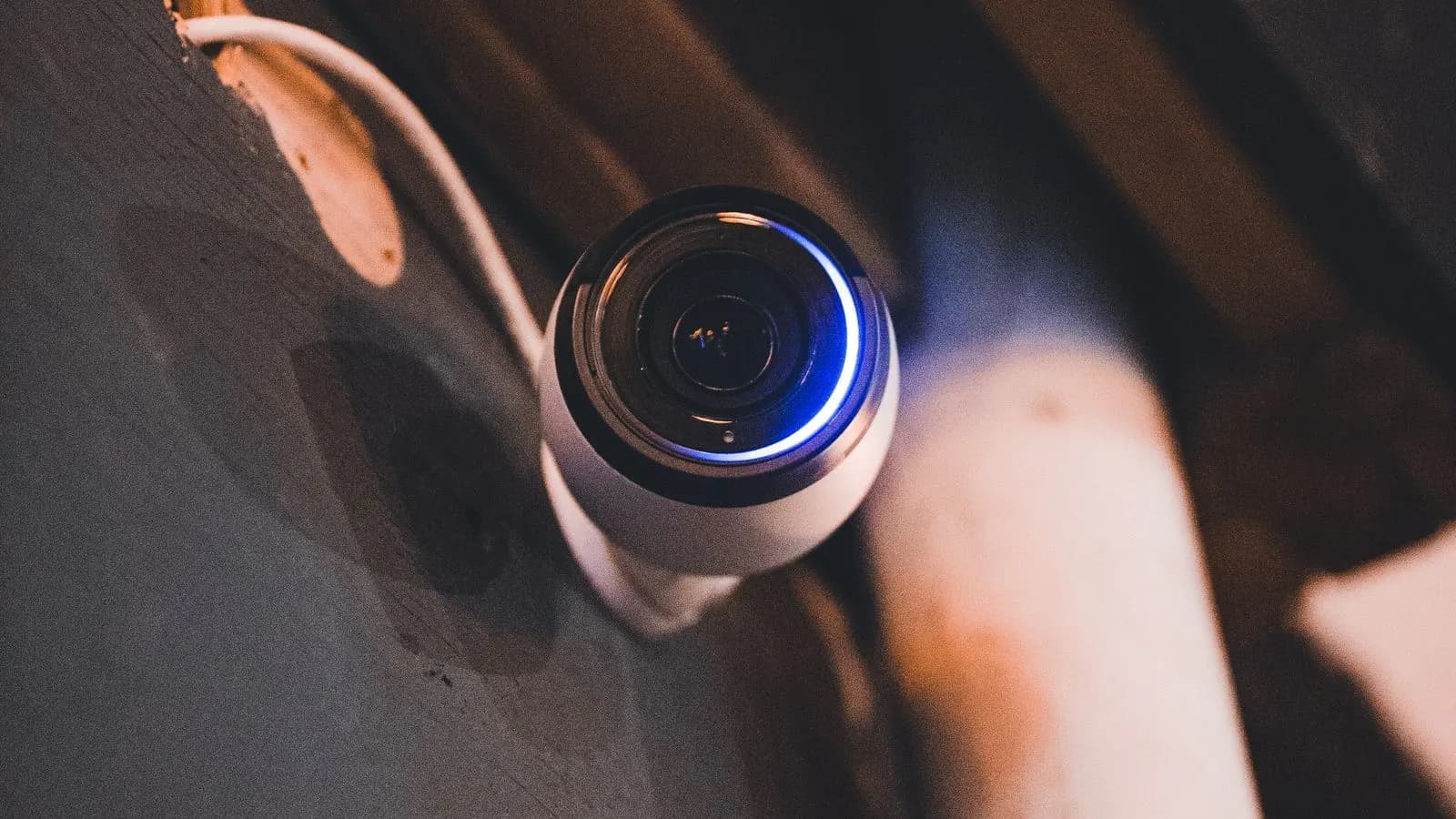
Straight answer: video analytics software is what turns a camera that records into a camera that reports. Instead of storing footage nobody watches, it detects specific events and tells a person about them while there is still time to act.
Almost every CCTV system in India works the same way. Cameras record. The recorder overwrites itself on a loop. And footage is reviewed for exactly one reason: something already went wrong and you are trying to find out what.
That is a documentation system, not a security system. Video analytics is the software layer that changes which of the two you own.
What the term actually covers
"Video analytics" is a broad umbrella, and vendors stretch it. In practice it covers a handful of genuinely distinct capabilities:
Object classification. Deciding whether the thing that moved is a person, a vehicle, or an animal. This is the foundation everything else is built on.
Line and zone rules. You mark a boundary — a compound wall, a loading bay, a stock room door — and the software reports when a class of object crosses it. This is what most people mean by intrusion detection.
Counting. People or vehicles through an entrance over a period. Useful for footfall, gate traffic and shift patterns.
Face recognition. Matching a face to an enrolled list. In Indian businesses this is used far more for attendance than for security.
Camera health and tampering. Detecting that a camera has gone dark, been moved, or been covered. Unglamorous and probably the highest-value item on this list, because a blind camera nobody noticed is the most common real failure.
Why it is not the same as motion detection
Your recorder almost certainly has motion detection already, and you have almost certainly turned it off. That is not a coincidence.
Motion detection compares pixels between consecutive frames. It cannot tell the difference between an intruder and a moth on the lens, rain, a swaying branch or headlights sweeping across a wall. So it fires all night, and within a week everyone mutes it.
Analytics classifies the object before deciding. A branch moving is not a person, so no alert is raised. That single distinction is the difference between notifications people read and notifications people disable.
The claims worth distrusting
Three things get oversold, consistently.
"Predicts crime." No. Software can detect defined behaviours — loitering in a zone, a boundary crossed, a vehicle stopped where it should not be. Those correlate with intent, sometimes. Nothing on the market predicts.
"99% accurate." Accuracy is meaningless without stating the conditions: camera placement, lighting, distance, angle, and what counts as a hit. The same model that is excellent on a well-placed camera at chest height is poor on one mounted high looking at the tops of heads. Ask for accuracy on your cameras, during a trial.
"Works on any camera." Broadly true for the software, misleading in practice. The constraint is almost never the camera's age — it is where the camera is pointing. Analytics cannot recognise a face the camera never gets a usable view of.
The honest test for whether you need it
Skip the feature lists and answer one question.
When something happens on your site at 2am, who finds out, and when?
If the answer is "we look at the footage the next morning", analytics is the thing that changes it. If you genuinely have someone watching live feeds around the clock and acting on them, you already have the outcome and you are buying a smaller improvement.
For most sites — a factory with a night guard covering one gate at a time, a warehouse with nobody on site after 8pm, a shop with sixteen cameras and no monitor — the honest answer is nobody finds out until the morning.
Where to start
Do not start with the longest feature list. Start with the two or three events that would actually change your night: someone in the yard after hours, a camera going dark, a vehicle at the loading bay outside delivery hours.
Get those working reliably on the cameras you already have, with alerts that reach a real person's phone. A system with three rules that people trust beats one with thirty that everyone has muted.