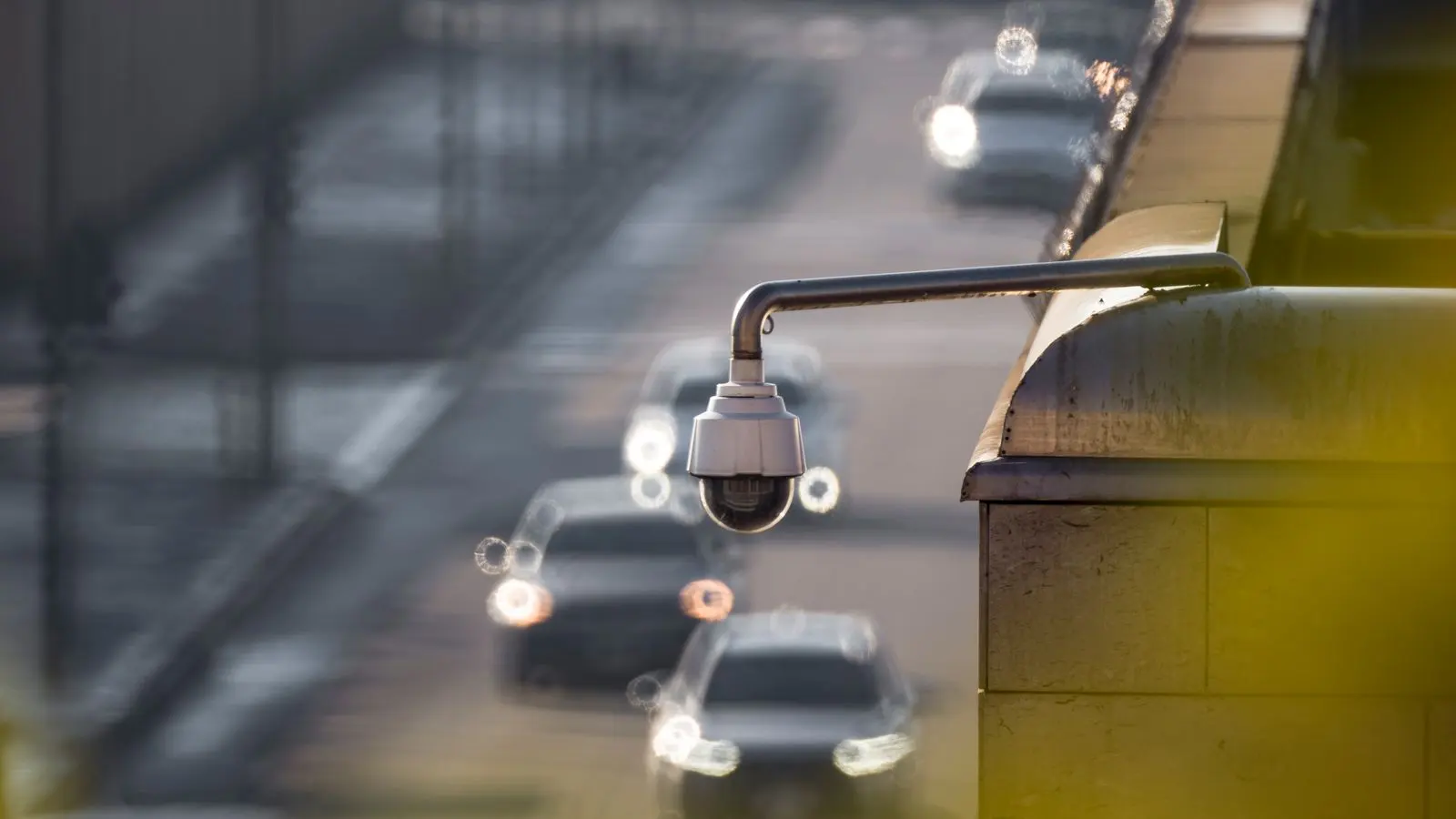
Straight answer: a CCTV camera blind spot isn't just an area with no camera — it's any spot where a camera exists but can't clearly identify a person, because of distance, angle, an obstruction, or bad light. Someone casing a site finds these gaps in a few minutes just by walking the boundary and watching where the cameras point. The fastest way to close them is to do that same walk yourself, before they do.
Most site owners think about their cameras from the inside — where the monitor is, what the app shows. Anyone planning to break in thinks about them from the outside, looking for the three metres between two fields of view. That's a different exercise, and it's worth doing deliberately at least once.
What actually counts as a blind spot?
Not just "no camera here." A camera can point straight at an area and still be useless for identification if it's too far away, badly lit, or aimed at an angle that only ever catches the top of someone's head. The honest test isn't "is this covered" — it's "would this footage let me identify who was here." A lot of nominally-covered ground fails that test.
Where do blind spots usually turn up?
Compound corners. A camera mounted mid-wall covers the wall in front of it well and the two corners poorly. Corners are exactly where someone climbing over tends to linger.
The back and sides of the building. Front-gate cameras get budget and attention first. The side lane and the rear, where deliveries and staff move, are frequently an afterthought — and are also the quietest, least-watched approach to a building.
Directly beneath a camera. A wide-angle lens mounted high to cover distance often has almost no useful view of the ground immediately under it. Someone who knows this will walk close to the wall, under the camera, rather than across the open yard it's watching.
Behind stock, vehicles, or pillars. Anything stacked or parked after the cameras were installed creates a new blind spot that didn't exist on installation day. This is the blind spot that grows over time without anyone deciding to create it.
Staff and service entrances. Attention goes to the main gate. A side door used by staff, cleaners, or contractors is often on a cheaper camera, a worse angle, or no camera at all.
How do you actually check your own site?
Walk the full perimeter from outside the boundary, the way someone casing it would — not from inside where you already know the layout. At every few metres, stop and ask: which specific camera would clearly identify someone standing right here? Not "is there a camera nearby" — which one, specifically, and would the footage actually be usable.
Do this once during the day and once after dark. A spot that's fine in daylight can become a blind spot after sunset if the lighting there is weak, because even a covering camera produces unusable footage in low light.
Write down every point where you can't confidently name a camera. That list is your actual blind-spot map, and it's usually shorter and more specific than "add more cameras everywhere," which is the instinct most people reach for first.
Does adding more cameras solve this?
Only the ones placed to close a gap you've actually identified. Cameras added without a walk-around like this tend to duplicate coverage that already existed, while corners, undersides, and the far side of the building stay exactly as exposed as before. Fixing three well-chosen positions after a proper walk usually beats adding six cameras at random.
Where this falls short
A walk-around finds structural blind spots — geometry, obstruction, distance. It won't catch a camera that's covered correctly on paper but has drifted out of position, gone offline, or degraded over time; that needs a periodic check of the actual live feeds, not just a one-time site survey. And no camera placement, however careful, replaces having someone who actually reviews the footage or acts on an alert — coverage without a response plan just produces a well-documented incident.
We build the software that runs on top of cameras once they're placed correctly, so we have a stake in recommending this exercise — a well-tuned detection system still can't see around a corner nobody covered. The walk-around above costs nothing and doesn't need us.