People & operations · Feature guide

People counting camera for retail stores

Busy feels different to different people. A people counting camera gives you a more consistent view of entries, exits or occupancy, depending on the setup. Retail teams can use the figures to compare opening hours, staffing patterns and periods of high footfall.

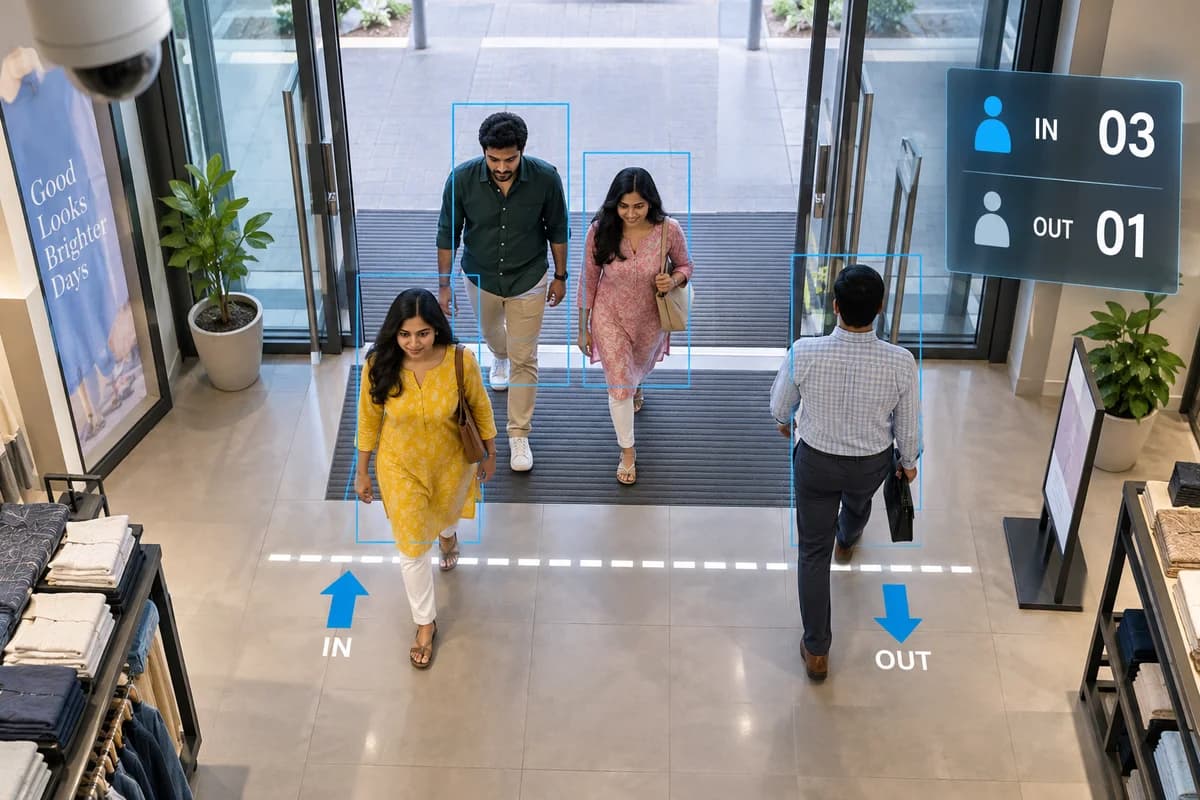
Illustration counting people entering and leaving an Indian retail store
AI-generated illustration of people counting & occupancy. The scene and overlays explain the concept; they are not a PGAK screenshot or measured result.

How it works

Count entries and exits or estimate the number of people present in a defined area.

Where it could help your business

Compare busy periods across retail outlets.

Decide what you want to measure before choosing the camera. Door crossings and current occupancy are different questions. Compare sample counts with a manual tally, and account for staff movement, multiple entrances and groups walking close together.

What your camera setup needs

Mounting and complete entrance coverage matter. Occupancy figures are estimates, not certified headcounts.

Is footfall the same as the number of customers?

No. A crossing count may include staff, repeat visits and people who do not buy. Interpret it alongside your operating hours and other business data.

Check it on your own site

Bring a camera model list and explain the event you want to find or detect. We can use that to scope a compatibility assessment. Ask for a written proposal naming the supported functions, processing hardware, licences and pilot checks before agreeing to an installation.

Check my camera setup →

Calculator · C11

People counting and occupancy: estimate it for your site

Use your own measurements. The result is the staff time released, shown separately from any cash, using the formula below. It runs in your browser and nothing is sent anywhere.

Fields start empty. A blank is “not entered”, not zero; type 0 where 0 is true.

Checking the automatic count against a manual tally.

Money (optional)

Salary plus benefits and overheads, per working hour. Needed only if you enter a realisation above 0%.

0% unless you can name the mechanism — overtime that stops, a post not refilled, a contract reduced.

Only from your own records. May be negative.

Licences, support, connectivity. Enter 0 if there is none.

Hardware, installation, commissioning. Enter 0 if there is none.

Enter every amount on the same basis — all including GST or all excluding it. Nothing here adds or removes tax. Values are nominal rupees, not discounted.

Result

Enter your own figures, or load the worked example, to see the result.

How it is calculated

hours = rounds × days × manual minutes ÷ 60 − verification hours

Worked example (illustrative inputs)

4 rounds a day; 26 days; 10 minutes; 2 verification hours.

staff time released: 15.333 hours a month.

Formula version 1.0.0. The full standalone tool: retail contribution.

What this does not tell you

  • Hours released are capacity, not cash. They become cash only through a mechanism you state — overtime that stops, a post that is not refilled — entered as the realisation fraction.
  • The 'after' values are your assumptions or pilot measurements. PGAK publishes no effectiveness figure for this feature.

Evidence status: Supplier/integration or marketed capability; PGAK availability and site performance require verification.

Request a site-specific assessment with these assumptions

Your result stays on this page either way. If you want it checked against your cameras and quotation, leave a number; mention the figures on the call. Nothing you typed into the calculator is sent with this form.

Request a camera assessment. Timing and scope agreed on the call. By submitting, you ask PGAK to contact you about this enquiry. Privacy notice.