How it works
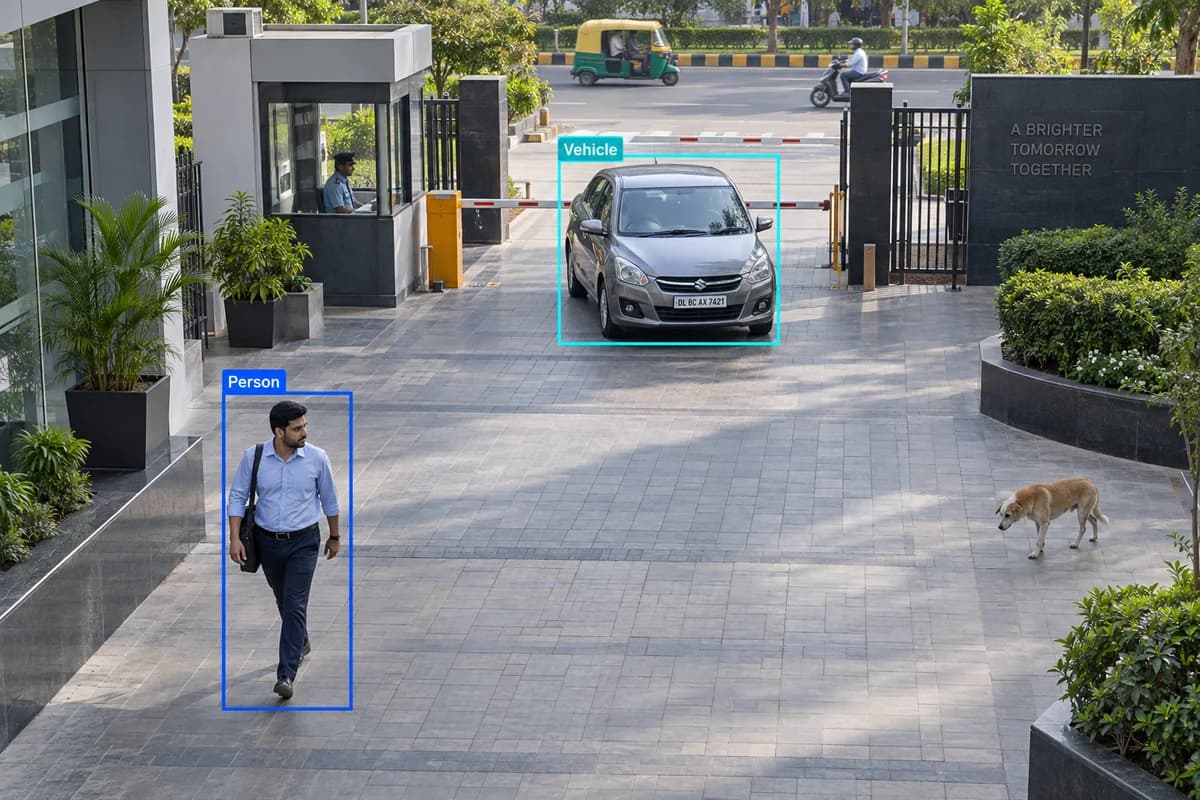
Filter activity by the type of object detected instead of treating every movement as an incident.
Where it could help your business
Focus a commercial entrance’s alerts on people and vehicles.
Test a normal working day as well as quiet hours. Include headlights, rain, shadows and people carrying large objects. Review missed events alongside false alerts; making a system quieter is not helpful if it also stops reporting activity you need to see.
What your camera setup needs
Detection depends on object size, angle and lighting. Classification reduces noise; it does not eliminate errors.
Does human detection remove all false alarms?
No. Small subjects, poor lighting and unusual camera angles can confuse classification. Good installation and testing matter as much as the feature name on the box.
Check it on your own site
Bring a camera model list and explain the event you want to find or detect. We can use that to scope a compatibility assessment. Ask for a written proposal naming the supported functions, processing hardware, licences and pilot checks before agreeing to an installation.
Check my camera setup →