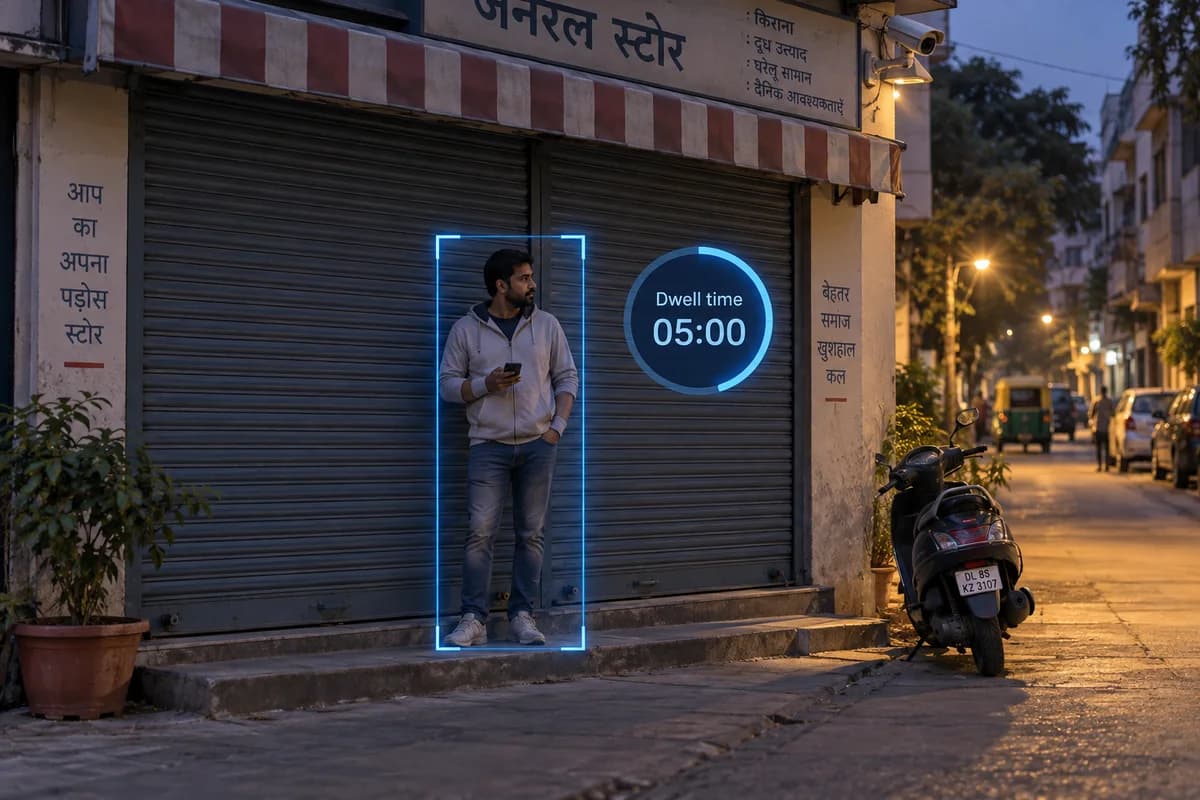
How it works
Flag a person or vehicle remaining in a monitored area beyond a configured time.
Where it could help your business
Review extended presence near a shop entrance after closing.
Choose the threshold around how the area is actually used. A delivery waiting point needs a different rule from a restricted doorway. Exclude places where staff or customers routinely wait, then review whether the remaining alerts are useful.
What your camera setup needs
Dwell thresholds need tuning. Waiting is not automatically suspicious; an operator reviews context.
Does a loitering alert mean someone is suspicious?
No. It means the configured time threshold was reached. An operator needs to check the circumstances before taking action.
Check it on your own site
Bring a camera model list and explain the event you want to find or detect. We can use that to scope a compatibility assessment. Ask for a written proposal naming the supported functions, processing hardware, licences and pilot checks before agreeing to an installation.
Check my camera setup →